
Monshaugen & Van Huff, P.C. specializes in defending Texas businesses against dram shop liability claims. Contact us today for expert legal assistance.
We are dedicated to defending Texas businesses against dram shop liability claims. With a deep understanding of Texas’ complex dram shop laws, our experienced attorneys are uniquely equipped to help you navigate the legal landscape and protect your business from costly lawsuits.
Our expertise spans across various sectors, including bars, restaurants, nightclubs, liquor stores, and other establishments that sell or serve alcoholic beverages. We are committed to providing personalized and results-driven legal representation to ensure your business remains secure and prosperous.
Don’t let dram shop liability claims put your business at risk. Let us be your trusted legal partner in safeguarding your business interests. Contact us today for a free consultation.
About Us
At Monshaugen & Van Huff, P.C., we pride ourselves on being Texas’ premier legal experts in dram shop defense litigation. Our team of skilled attorneys has a proven track record of successfully defending businesses against dram shop liability claims, allowing our clients to focus on their core operations with peace of mind.
Our attorneys are not only knowledgeable in Texas dram shop laws, but also possess a deep understanding of the local business landscape. This unique combination of legal and industry expertise ensures that we provide comprehensive and practical solutions to our clients.
Practice Areas
We offer a wide array of legal services tailored to meet the unique needs of Texas businesses facing dram shop liability claims. Our practice areas include:
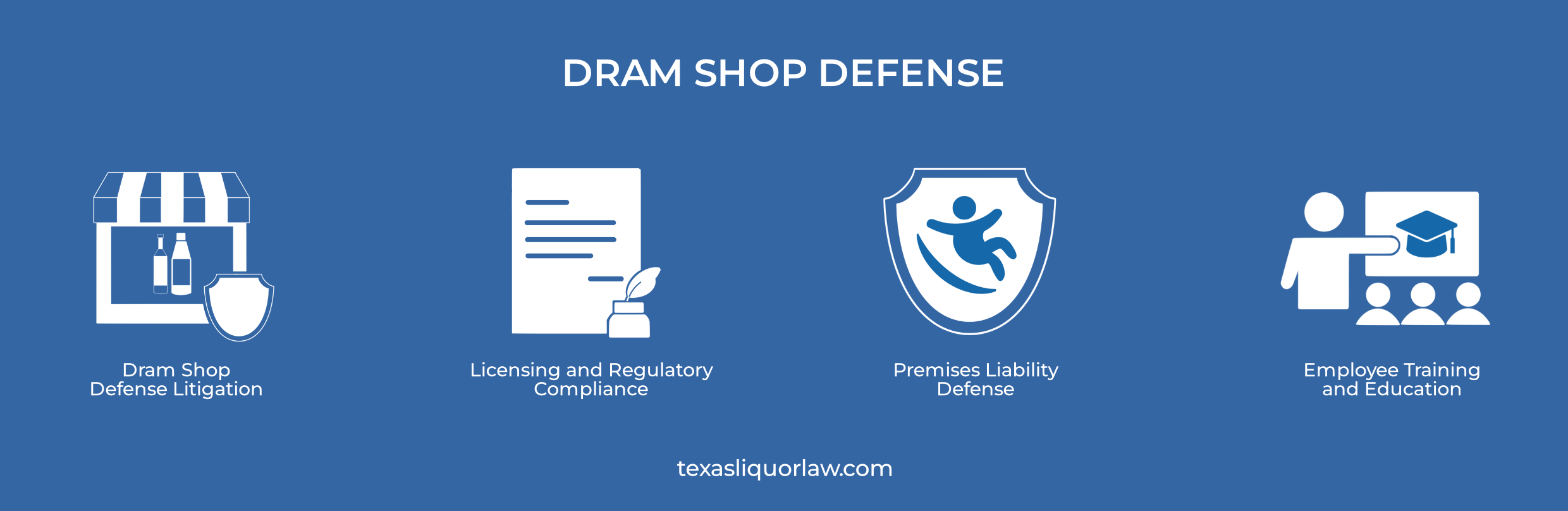
Dram Shop Defense Litigation
Our attorneys work tirelessly to protect your business from liability claims arising from alcohol-related incidents. We meticulously examine each case to develop a robust defense strategy, striving to achieve the best possible outcome for your business.
Licensing and Regulatory Compliance
Our legal team provides expert guidance in obtaining and maintaining liquor licenses and ensuring compliance with Texas Alcoholic Beverage Commission (TABC) regulations. We aim to help you avoid costly penalties and legal issues associated with non-compliance.
Premises Liability Defense
We defend businesses against premises liability claims arising from accidents and injuries sustained on their property, including slip and fall accidents, inadequate security, and more.
Employee Training and Education
Our attorneys offer comprehensive employee training and education programs to help your staff understand and adhere to Texas dram shop laws, reducing the risk of alcohol-related incidents and subsequent liability claims.
Contact Us
If you’re facing dram shop liability claims or need expert legal guidance to safeguard your business, Monshaugen & Van Huff, P.C. Dram Shop Defense Litigation Firm is here to help. Contact us today to schedule a free consultation with our experienced attorneys.
Frequently Asked Questions Regarding Dram Shop Defense
What is a dram shop lawsuit?
A dram shop lawsuit is a legal claim brought against a bar, restaurant, or other establishment that serves alcohol for the over-serving of alcohol to a patron who subsequently causes injury or death to themselves or a third party as a result of intoxication.
What are Texas dram shop laws?
Texas dram shop laws are designed to hold alcohol-serving establishments liable for over-serving patrons who later cause injury or death due to intoxication. These laws are outlined in the Texas Alcoholic Beverage Code, specifically Section 2.02, which sets the criteria for liability and the legal standard of care.
What is the standard of care for alcohol-serving establishments in Texas?
The standard of care for alcohol-serving establishments in Texas requires these establishments to not serve alcohol to patrons who are obviously intoxicated to the point that they present a clear danger to themselves and others.
How does a dram shop lawsuit work in Texas?
In a Texas dram shop lawsuit, the injured party (plaintiff) must prove that the alcohol-serving establishment (defendant) was negligent in over-serving the intoxicated person who caused the injury. The plaintiff must establish that the establishment served alcohol to the patron when they were obviously intoxicated, and the intoxication was a proximate cause of the damages suffered by the plaintiff.
What defenses can a Texas law firm use to defend against a dram shop lawsuit?
Some common defenses in a dram shop lawsuit include:
- Challenging the claim that the patron was obviously intoxicated when served.
- Arguing that the establishment did not serve alcohol to the patron when they were obviously intoxicated.
- Proving that the patron’s intoxication was not the proximate cause of the plaintiff’s injuries.
- Demonstrating that the plaintiff’s own negligence contributed to their injuries, which may reduce the amount of damages awarded.
What is the role of comparative negligence in a Texas dram shop lawsuit?
Texas follows a modified comparative negligence rule, which means that if the injured party (plaintiff) is found to be partially at fault for their injuries, their damages may be reduced by their percentage of fault. If the plaintiff is found to be more than 50% at fault, they may be barred from recovering any damages.
What types of damages can be recovered in a Texas dram shop lawsuit?
In a Texas dram shop lawsuit, the injured party (plaintiff) may seek to recover various types of damages, including:
- Medical expenses
- Lost wages and loss of earning capacity
- Pain and suffering
- Mental anguish
- Physical impairment or disfigurement
- Wrongful death damages, if applicable
How long do I have to file a dram shop lawsuit in Texas?
In Texas, the statute of limitations for a dram shop lawsuit is generally two years from the date of injury. However, there may be exceptions or specific circumstances that can alter this time frame. It is crucial to consult with a Texas attorney experienced in dram shop litigation to ensure you do not miss any deadlines.
How can a Texas law firm help me defend against a dram shop lawsuit?
A Texas law firm with experience in defending dram shop lawsuits can help you:
- Understand your legal rights and obligations.
- Develop effective defense strategies.
- Collect and analyze evidence to support your defense.
- Represent your interests in settlement negotiations or at trial.
- Minimize your liability and protect your business interests.